
Nautilus backs UN push for Strait of Hormuz humanitarian corridor as 20,000 seafarers stranded
21 May 2026
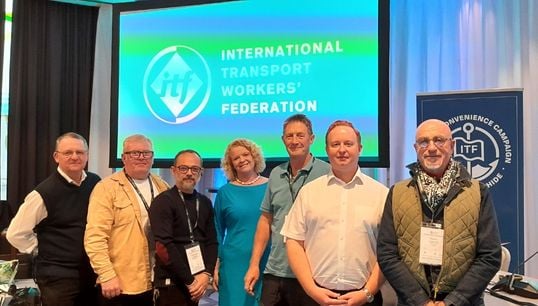
Nautilus International has joined mounting pressure on the United Nations to urgently establish a 30‑day humanitarian maritime corridor in the Strait of Hormuz, allowing stranded seafarers to evacuate safely from the region.
The move comes as escalating tensions have effectively shut key shipping routes, leaving around 20,000 seafarers stranded across the Persian Gulf, Strait of Hormuz and Gulf of Oman.
Nautilus representatives from the UK and Netherlands and affiliate unions in the Nautilus Federation joined those from other unions at the International Transport Workers’ Federation (ITF) Fair Practices Committee (FPC) meeting in Rotterdam on 13-14 May 2026, where delegates warned of a worsening humanitarian crisis in the region. The area has been designated a warlike zone by the International Bargaining Forum (IBF), entitling seafarers to repatriation – though many remain unable to leave.
Nautilus International, alongside Nautilus Federation affiliate CFDT, co-sponsored a motion with the RMT and CGT trade unions calling for stronger international action. The motion, highlighting serious erosion of seafarers' rights, was unanimously adopted by the global dockers' and seafarers' unions which take part in the FPC.
The motion warns that the blockade of the Strait of Hormuz is not only disrupting global trade but driving a wider social and economic crisis affecting maritime workers worldwide.
It calls on the UN Security Council to urgently establish a temporary humanitarian corridor to allow safe passage for civilian vessels and crews.
Nautilus head of international relations Danny McGowan said: 'Members of the vast majority of Nautilus Federation affiliates are affected by the situation in the Persian Gulf, Strait of Hormuz and Gulf of Oman. Working with those affiliates and other ITF unions, we will continue to press the United Nations and its agencies to ensure seafarers can evacuate safely.'
The FPC estimates that more than 1,800 assistance requests have been filed with the ITF since late February. Around half involve unpaid wages or absent contracts, with others citing repatriation barriers and shortages of food, water and fuel.
While the International Maritime Organization (IMO) and International Labour Organization (ILO) have urged states to protect civilian shipping and crews, delegates said these appeals have yet to deliver meaningful support on the ground.
Tags