
- Topics
- Campaigning
- Careers
- Colleges
- Community
- Education and training
- Environment
- Equality
- Federation
- General secretary message
- Government
- Health and safety
- History
- Industrial
- International
- Law
- Members at work
- Nautilus news
- Nautilus partnerships
- Netherlands
- Open days
- Opinion
- Organising
- Podcasts from Nautilus
- Sponsored content
- Switzerland
- Technology
- Ukraine
- United Kingdom
- Welfare
Middle East crisis: maritime union helps to repatriate stranded seafarers
9 April 2026
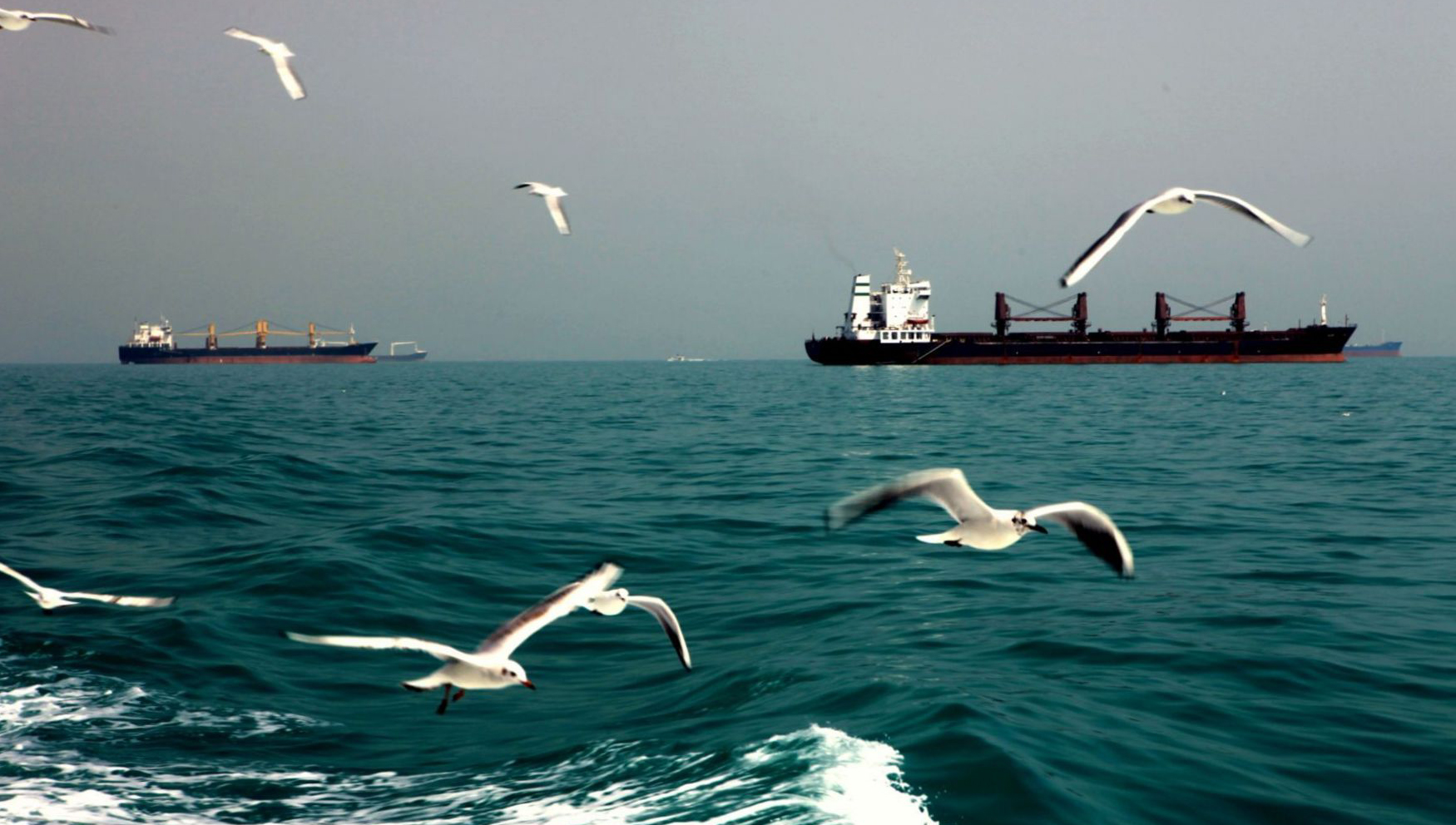
Nautilus International has identified safe routes for seafarers to return home, despite quickly evolving security risks in the Gulf region, Rob Coston reports
Nautilus International has identified safer travel options to ensure members are not left stranded in the Persian Gulf as the security situation evolves.
'Repatriation routes have been established through Oman towards Muscat, and through Saudi Arabia, which have greater geographical distance from directly impacted areas,' Nautilus director of organising Martin Gray said.
A key area of support has been helping members understand their right to refuse to enter a war zone and to get them home safely.
Under the Maritime Labour Convention (MLC) seafarers have:
- an unqualified right to repatriation if a vessel is bound for a war zone without their consent [Shipowners cannot request advance payment for repatriation from seafarers. If a shipowner does not make repatriation arrangements, seafarers on UK ships can be repatriated by the MCA.]
- protection from dismissal or penalty for refusing to sail into warlike conditions [these rights do not disappear once a vessel has entered such a designated warlike area]
- extra compensation if they agree to sail into a warlike area and are on a vessel sailing under International Bargaining Forum agreements
- a legal right to a safe working environment, including protection from extreme security risks through fatigue management, enhanced watchkeeping, mental health welfare support, regular communication with families and access to free medical care onboard or ashore
- complaint and enforcement mechanisms if those rights are breached.
The Union has also intervened where necessary to ensure employers meet their obligations.

'We've been able to support members by having some fairly robust discussions with companies to remind them of the rights of the seafarer,' Mr Gray said. 'Flights and accommodation being too expensive is not a valid reason to delay or defer repatriation.'
Informed consent is critical when crews are asked to remain in high-risk areas.
'Shipowners should be proactive in seeking that defined, informed consent about people's willingness to remain,' he said. 'Or whether they would prefer the repatriation which they’re entitled to.'
A significant number of Nautilus members are directly impacted and operating in the Gulf, some of whom had observed military operations taking place.
While estimates from international bodies suggest around 20,000 seafarers are directly affected, Mr Gray warned the true figure could be far higher.
'It is possible that somewhere in the region of 30,000 maritime professionals across a variety of different sectors which are not being counted are directly being impacted,' he said. 'And we are supporting them as best as we are able.
'Primarily, what we've seen is a lot of concern for safety,' Mr Gray said. 'We took very immediate steps to understand the security risks and have been exchanging information with members on a regular basis as that picture changes.'
'There has been a lot of contractual inquiries,' Mr Gray said. 'Members are looking at agreements and asking why protections aren’t being applied to them.'
Superyacht crew
Members from a wide range of sectors have been affected by the crisis. However, there have been different challenges for those in the large yacht and superyacht sector, where protections can be inconsistent.
'We've got a number of members starting to highlight challenges around supplies of food and water, and fuel, and not being kept informed of the security risks,' he said. 'There are very expensive yachts in the region being crewed by very scared seafarers who are not getting the level of information that they would expect.'
Mr Gray also pointed to gaps in oversight and regulation affecting these workers.
'Private yachts are largely unregulated,' he said. 'That means that crew are at the whim of the owner and operators in being able to get home or secure additional compensation relevant to the risk.'
The impact of uncertainty
Even seafarers far from the conflict zone are feeling the effects, particularly through disruption to global air travel. Airspace restrictions and rerouted flights have created delays, increased costs, and logistical complications for crews travelling to and from vessels.
'Aircraft are being forced further south, with longer durations and different routes that don’t normally operate at that volume,' he explained. 'Seafarers are having to take quite circuitous routes via South Africa or North America to get home.'
This has led to growing uncertainty among members about future voyages, with some members concerned that renewed air travel via the region could leave them trapped there if the war becomes even more intense.
'There's a lot of concern about whether a temporary lull in hostilities is a move towards resolution, or whether there will be a renewed escalation,' Mr Gray said. 'That uncertainty is not something maritime professionals enjoy having to deal with.'
Nautilus continues to monitor the situation closely and provide direct support to members.
'The key piece of advice is : know your rights and how they apply to you,' Mr Gray stressed. He also noted that seafarers should be aware of how the conflict could affect the chances of a payout on life insurance.
'If you are not covered appropriately, there are seafarers who could be facing devastating consequences for their families if the worst was to happen,' he added.
'The most important thing, though, is to understand your contract, and if you don't understand it, contact us so that we can help explain it and enforce your rights.
'Don't feel pressured to go into the conflict zone. Don't feel pressured to remain onboard longer than you need to, and don't feel pressured to accept worsening terms and conditions.'
Tags
More articles
FAQ: guidance for members in the Middle East
This FAQ for seafarers reflects the current security environment following Operation Epic Fury (United States) and Operation Roaring Lion (Israel), and subsequent Iranian retaliatory strikes
IBF designates Strait of Hormuz a Warlike area
The designation follows a sharp deterioration in the security situation in the region, including confirmed attacks on commercial vessels and increasing instability affecting international shipping routes.
Flag state failures putting seafarers at risk in Persian Gulf: Union renews calls for safe passage
Message from Nautilus general secretary Mark Dickinson on the escalating US-Israeli war against Iran and the effective closure of the Strait of Hormuz.
IMO member states agree to work together on evacuation plan for Persian Gulf
As Nautilus works to support members affected by the Middle East conflict, the International Maritime Organization (IMO) is taking the lead on evacuating the 20,000 civilian seafarers and 2,000 merchant vessels currently stranded in the Persian Gulf