
- Topics
- Campaigning
- Careers
- Colleges
- Community
- Education and training
- Environment
- Equality
- Federation
- General secretary message
- Government
- Health and safety
- History
- Industrial
- International
- Law
- Members at work
- Nautilus news
- Nautilus partnerships
- Netherlands
- Open days
- Opinion
- Organising
- Podcasts from Nautilus
- Sponsored content
- Switzerland
- Technology
- Ukraine
- United Kingdom
- Welfare
Maritime Charity Column: progress on seafarers' welfare – but challenges remain, by Helene Perfors, port chaplain, Dutch Seafarers’ Federation
23 April 2026
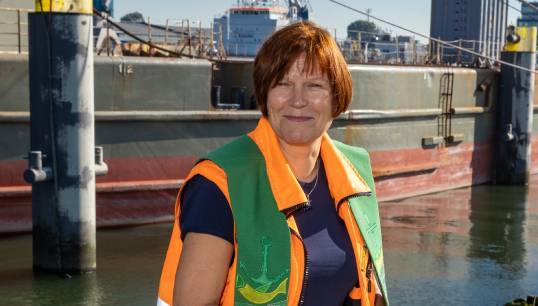
Every day, seafarers keep global trade moving, but supporting their wellbeing – especially when they are far from home – remains a complex and ongoing task. Helene Perfors, chaplain at the Port of Rotterdam with the Protestant Church of the Netherlands, works closely with the Dutch Seafarers' Federation (NZC) and trade unions to support seafarers' welfare across Dutch ports. In this column, she shares some of the key issues NZC has been focusing on over the past six months.
MARITIME CHARITY COLUMN
Seafarers' Welfare: protections exist, gaps remain
Despite international legal protections such as the Maritime Labour Convention (MLC), seafarers' welfare is not always fully respected in practice. One persistent problem is shore leave. Access to shore leave, safe transport, and basic welfare services is still too often restricted or overlooked.
NZC continues to raise these concerns directly with Port Facility Security Officers (PFSOs) and port authorities. In the Port of Amsterdam, NZC chaplain Leon Rasser has been working closely with the harbour master and port authorities to keep seafarers’ rights and needs on the agenda.
Progress is possible – but it requires constant attention and cooperation.
The impact of the Middle East Conflict
The ongoing conflict in the Middle East is affecting shipping routes, crew safety, and the wellbeing of seafarers worldwide. Uncertainty, route changes, and security risks have increased pressure on crews at sea.
For families at home, the worry can be even greater. Communication is not always clear, and much information cannot be shared for security reasons. This lack of clarity creates anxiety for partners, parents, and children waiting on shore.
Together with the Association of Seafarers' Partners and Families (VMG), NZC offers support to these families. Sometimes this means professional pastoral care; sometimes it simply means being available to listen. Knowing someone understands their fears can make a real difference.
SEA‑CARE: strengthening mental health support at sea
A major positive development is the launch of SEA‑CARE, a new EU‑supported initiative aimed at improving mental health support for seafarers after serious onboard incidents.
Dutch organisations NZC and SPWO are co‑initiators of this project, which was officially introduced at the World Maritime University in Malmö.
SEA‑CARE focuses on:
- training maritime crisis responders
- building a European network of qualified mental health professionals
- supporting shipowners and operators after traumatic incidents at sea
The goal is simple but vital: early support, faster access to care, and preventing long‑term psychological harm to crew members.
A survey has already been carried out among shipping companies and seafarers in Western Europe. The results will help shape future training, awareness, and response procedures – making sure help reaches seafarers when they need it most.
Working together for seafarers' wellbeing
NZC firmly believes that improving seafarers' wellbeing cannot be done alone. Real change comes through cooperation – between welfare organisations, unions, port authorities, shipowners, and mental health professionals.
While challenges remain, commitment, collaboration, and practical action can – and do – make a difference. Seafarers deserve nothing less.
The Maritime Charity Column is a regular feature in the Nautilus Telegraph. Submissions are invited from a range of organisations by the Telegraph editor.
Tags