
- Topics
- Campaigning
- Careers
- Colleges
- Community
- Education and training
- Environment
- Equality
- Federation
- General secretary message
- Government
- Health and safety
- History
- Industrial
- International
- Law
- Members at work
- Nautilus news
- Nautilus partnerships
- Netherlands
- Open days
- Opinion
- Organising
- Podcasts from Nautilus
- Sponsored content
- Switzerland
- Technology
- Ukraine
- United Kingdom
- Welfare
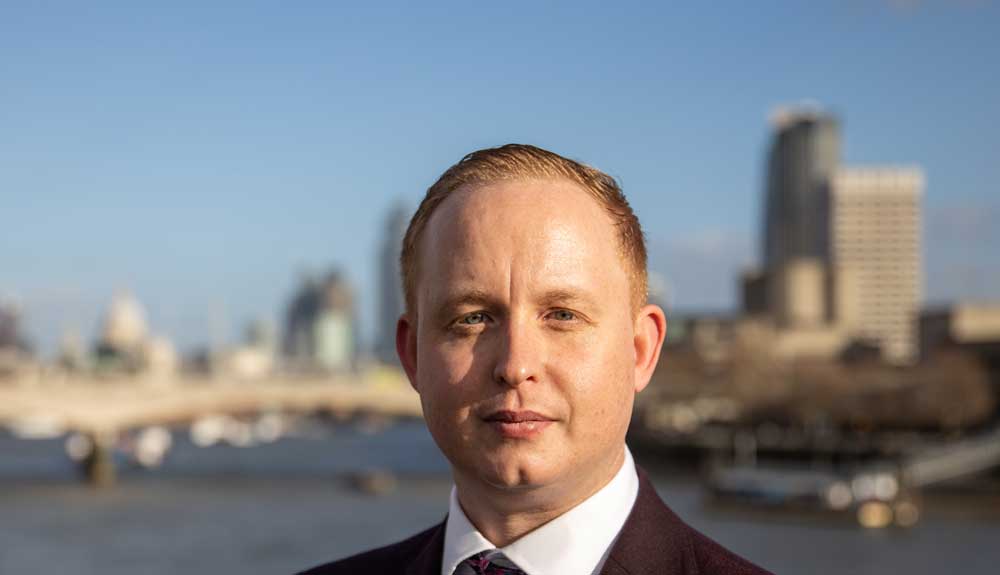
Enshrining workers’ rights in the global economic model is an important part of how we can build a better future for seafarers, writes Nautilus head of international relations Danny McGowan
Global cooperation can often feel remote from the day-to-day realities of working people. But decisions taken at the highest levels – including by the G7 group of the world’s most powerful countries – have a direct and lasting impact on jobs, wages and rights across the maritime sector and beyond.
That’s why engagement through the Labour 7 (L7) matters. L7 is the official engagement group representing trade unions to the G7. It ensures that the voices of workers are not just heard, but actively shape the international agenda.
As trade unions, we have a responsibility to make our influence count – to help build a global economy that places workers, democracy, and the planet at its centre.
The UK TUC has been playing its part by attending the L7 summit in Paris on 5 May, where international trade unions met with each other and with representatives of G7 governments, including French ministers, and progressive French academia.
In a statement issued ahead of the meeting, L7 spoke directly to challenges our members recognise all too well. For too long, the global trading system has placed downward pressure on wages and working conditions, creating a race to the bottom that benefits neither workers nor sustainable economic growth.
Trade imbalances are not abstract economic concepts. They are rooted in decisions that suppress wages, weaken collective bargaining, and prioritise competitiveness over fairness. When countries rely on low labour costs to maintain an edge, it undermines standards everywhere – including the UK, Netherlands and Switzerland.
The L7 is clear: this model must change. A fair and sustainable trade system must be built on decent work, strong labour protections, and respect for fundamental rights. That means ensuring that wages keep pace with productivity, strengthening labour market institutions, and tackling the spread of insecure and non-standard forms of work.
Central to this is the role of collective bargaining. Where workers have a genuine voice, outcomes are better, not just for individuals but for entire economies. Strong collective bargaining agreements help drive up standards, reduce inequality, and create more stable and resilient industries. The L7 is therefore urging the G7 to work towards the adoption of an action plan on Trade and Decent Jobs to promote a new, fair and sustainable trade model.
This aligns with what we see across the maritime sector. Fair competition depends on a level playing field. Without it, responsible operators and properly protected seafarers are undercut by those companies willing to exploit gaps in regulation. As Nautilus International, and in partnership with our sister unions in the Nautilus Federation and beyond, we will continue working to push that message forward – and to ensure that workers’ voices are heard by global economic decision makers.
Tags