
- Topics
- Campaigning
- Careers
- Colleges
- Community
- Education and training
- Environment
- Equality
- Federation
- General secretary message
- Government
- Health and safety
- History
- Industrial
- International
- Law
- Members at work
- Nautilus news
- Nautilus partnerships
- Netherlands
- Open days
- Opinion
- Organising
- Podcasts from Nautilus
- Sponsored content
- Switzerland
- Technology
- Ukraine
- United Kingdom
- Welfare
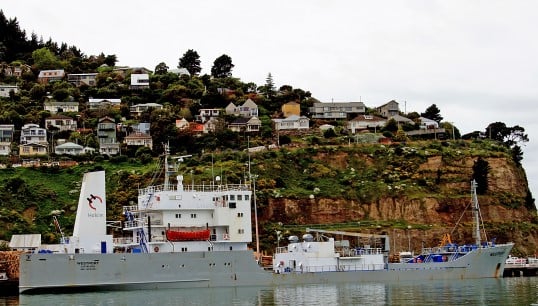
In November 2025, the International Transport Workers’ Federation (ITF) welcomed a decision by the New Zealand government to uphold domestic cabotage protections, rejecting an attempt by a foreign-flagged vessel to take over a key coastal shipping route.
New Zealand's associate transport minister James Meager declined an application by NovaAlgoma Cement Carriers (NACC) for an exemption under Section 198 of the Maritime Transport Act. Approval would have allowed the Panamanian-flagged and internationally crewed NACC Vega to replace the New Zealand-flagged and New Zealand-crewed MV Buffalo on a domestic coastal service.
Maritime unions said the decision sends a clear signal that New Zealand’s maritime laws and domestic workforce will not be undermined by multinational companies seeking to bypass cabotage rules.
Maritime Union of New Zealand (MUNZ) national secretary Carl Findlay said the minister had made the right decision and demonstrated that New Zealand jobs and standards matter.
‘This is a win for local jobs and New Zealand shipping,’ he said. ‘Holcim must now accept that its plan to replace experienced New Zealand crews with foreign labour has failed. The highly skilled crew of the MV Buffalo is ready, willing and able to continue serving New Zealand’s coastal distribution network.’
The ITF said the outcome reflects growing international recognition of the importance of cabotage in maintaining national maritime capability and supply chain resilience. Recent ITF research has highlighted the critical role played by national-flag fleets and domestic crews in supporting economic security and responding to emergencies.
Chris Given, chair of the ITF Cabotage Task Force, said the decision showed how effective cabotage policies deliver positive outcomes for workers, communities and national interests.
‘This ruling reinforces what our international research makes clear: foreign-flag shipping cannot be treated as a cheap substitute for a national maritime workforce,’ he said, pointing to the vital role domestic shipping played during national emergencies such as the Christchurch earthquake. ‘Allowing this exemption would have set a dangerous precedent, and the government was right to shut the door. A strong national fleet, crewed by New Zealanders, is essential for keeping communities connected and supply chains functioning.’
MUNZ said the case has underlined the need for a long-term, coherent policy framework to rebuild and sustain New Zealand’s coastal shipping industry.
Tags